
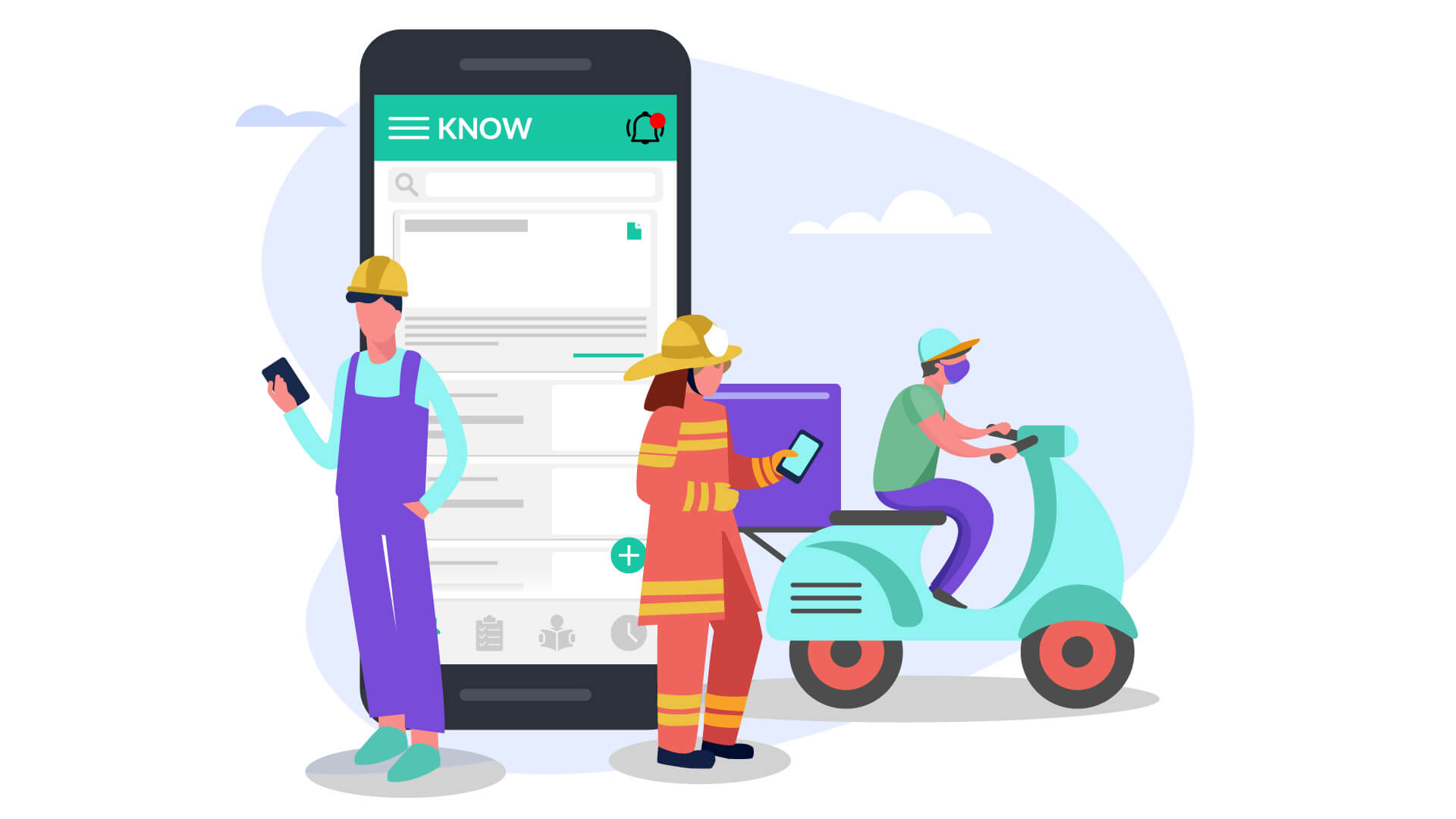
Digital Transformation of the Frontline Workforce
A Guide to help you make a digital shift in your business with a mobile app like KNOW...
Even before the sudden onset of the COVID-19 pandemic, digital transformation has always been a priority for many companies. However, most of the digital transformation strategies pay very little attention to the needs of frontline employees, who make up nearly 80% of the global workforce. As a result, outdated tools, inconsistent on-ground processes, and haphazard communication have prevented frontline employees from delivering their full potential.For companies to stay competitive, it is imperative that they empower their frontline workforce with the right tools to keep both productivity and morale high.
Why Digitization
Most of the communication between frontline employees and their managers happens in an unstructured manner over text messages, phone calls, or in person. This causes a lot of chaos in the work environment and leads to improper reporting, lack of transparency, leakage of confidential information, lower productivity, etc. In other words, 80% of the workforce faces the challenge of ineffective real-time communication with their managers and cannot effectively discharge their duties.
A study from a Harvard Business Review reveals that 87% of respondents feel their organization would perform much better when frontline employees are empowered to make on-the-spot decisions.
This is where digitization comes in. To enable frontline employees with the right tools to be more productive and make on-the-spot decisions, businesses need to replace clunky manual or paper-based processes. They must digitize all communication and operational processes, from the top-floor to the ground floor. But here’s the catch: how do you digitize your operations when frontline workers who constitute a huge majority of the workforce don’t even have access to a computer or even a company email address?The solution is simple - smartphones! Today, nearly everyone has access to a smartphone, and an effective solution like a mobile productivity platform can give frontline employees access to the tools they need to improve productivity.

A survey conducted by McKinsey reaffirms that adopting digital tools and processes emerge as keys to success. This includes adopting digital tools to make information more accessible across the organization, implementing digital self-serve technologies for employees, and finally modifying their standard operating procedures to include new technologies.Now that it’s clear how companies that digitally empower their frontline have a better chance at improving performance, let’s take a look at some of the key processes that your business should digitize:
Where are your staff
- Attendance Management – In today’s world of social distancing and remote working, timekeeping practices like paper-based timesheets, punch cards, and biometric systems, are no longer viable. You need a reliable tool that can help you track attendance in a digital, contact-less way. Replacing traditional attendance management processes will help you save time, avoid payroll errors, and ensure compliance. With a mobile app like KNOW, you can track attendance from your smartphone in just a single click, with location insights and flexible reporting.
- Shift Scheduling – Gone are the days of scheduling shifts through paper and spreadsheets. Keeping track of employee schedules manually is cumbersome and leaves room for errors like understaffing, missed shifts, duplicate shifts, etc. You need an efficient scheduling platform that can help you create error-free work schedules, send notifications and shift reminders in real-time, and track them with instant reports.
What are they doing
- Task Management – Digitizing how you assign and manage tasks will help you streamline daily operations and improve work efficiency. A mobile app like KNOW can help you create, assign, and track the progress of all tasks in real-time, and even get updates instantly in the form of texts and visuals. Managers can create, assign, and monitor task checklists for employees in just a few clicks, eliminating the chaos caused by archaic tools like paper, chat apps, and calls.
- Digital Forms & Data Collection – Many businesses still rely on manual processes for collecting and analyzing data. This can be extremely time-consuming and does not provide a foolproof solution to compliance efforts. Digitizing these processes can help you simplify how you gather information, especially for companies that have a large and widespread workforce. And of course, because all data is digitized, you can get insightful reports instantly. KNOW can help you create simple forms for data collection in just a click of a button, with various types of customizable fields, including adding e-signatures.
- Incident Reporting – Today, most companies still troubleshoot through WhatsApp conversations and phone calls. This can cause a lot of confusion and make it difficult to track what’s happening. You can avoid this chaos entirely by digitizing how issues and incidents are reported. Through an app like KNOW, you can report issues from anywhere instantly, and even share supporting markings, photos, videos, etc. You can automatically alert the right parties and track statuses with real-time reporting on a dashboard.
How you can help
- Broadcast Announcements – In the current situation, it has become essential to share important information and updates directly with all employees. To ensure it is shared accurately and timely across the organization, you can use a platform like KNOW for internal communications. KNOW enables you to share announcements instantly, in any language, and even track opens, reads, and message acknowledgments.
- Mobile Training - From training on safety measures and procedures related to COVID-19 to upskilling your workforce, you can deliver instructions and training to your frontline employees on their smartphones. Mobile training can help you make learning more accessible and engaging for your entire workforce. Learn more here.
Final Takeaway
These are just a few areas where digitization can play a major role in transforming your frontline workforce. With the right mobile productivity platform, the possibilities are endless. Whether your employees work from a desk inside an office or on-ground, digital transformation can bring your business closer to its goals of greater efficiency and happier teams.Don’t miss the boat!Schedule a demo.
Enjoying this article?
Ready to streamline your operations?

Related Articles


Bar Staff Training: A Complete Guide to Building a Skilled, Confident Team



.png)
How to Create Interactive Training Modules: A Practical Guide for Restaurants
.png)

Preventing Employee Burnout in Restaurants: Causes, Signs & Solutions