
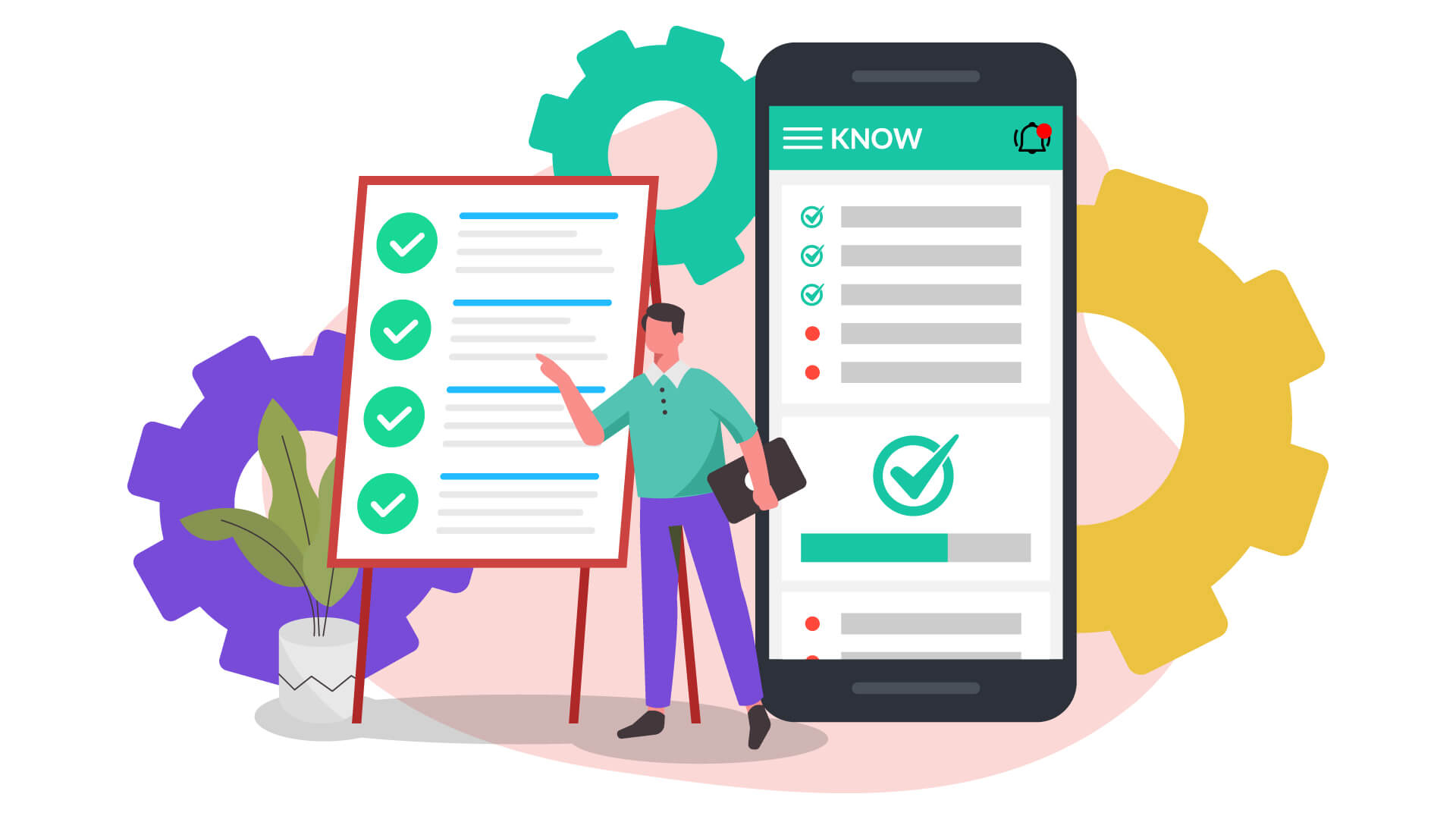
Workforce Readiness Checklist
A guide to help you improve workforce readiness and re-emerge from the Pandemic...
As businesses start to re-open and resume on-site operations, it is now imperative that you, as business leaders, pay immediate attention to the need to transform the traditional ways of running the business prevalent before the Pandemic. We are already living in a “new normal” and to adjust to this new normal, companies have to prepare their employees with the requisite information, skills, and tools to adapt to the new work environment.Download our Workforce Readiness Checklist.
Let’s take a look at some of the challenges that lay ahead and how you can navigate through them.
Sharing Company News & COVID-19 Updates
Government regulations and safety policies are changing every day. With so much uncertainty, communicating important information through WhatsApp, phone calls, bulletins, etc., is just not enough nor sustainable because messages can get lost in the noise. It is essential to have a simple, structured, and clear communication channel in place to give employees access to the latest and most accurate information in real-time.Learn more about Announcements, Alerts, and Communication.
Workplace Safety

To ensure the safety of all your employees and to comply with safety regulations, businesses have to implement safe reopening practices. These new practices often include new operating procedures, checklists, and compliance guidelines.Monitoring the new practices and maintaining records manually amidst this chaos can get extremely tedious, time-consuming, and leave room for human error.The most effective solution to this problem is to digitize these processes using electronic checklists and forms. This allows you to have transparency in the processes while getting instant access to reports and records. Digital tools can help you simplify information gathering processes, especially for companies that have a large and distributed workforce. Checklists such as sanitization schedules, staff temperature readings, etc. can now be filled and maintained digitally - and because all data is digitized, you can create insightful reports instantly.You can always be on top of information and make this transition in minutes with a COVID-19 workplace management app.
Problem Solving
The Pandemic has introduced workplaces to a world where people are no longer right next to each other, with social distancing norms, staggered schedules, and teams working remotely. In these circumstances, escalating problems quickly to the right leaders can get challenging. Moreover, relying on archaic methods of issue reporting like creating manual reports and troubleshooting through phone calls and text messages will only add to the chaos.It is crucial to set-up and fosters a culture of dynamic issue reporting, wherein people on the ground are empowered to report issues and problems instantly, the responsible parties are alerted automatically, resolutions are agreed upon and implemented collaboratively and the business leaders have full transparency and visibility on the progress made. Problem reporting and resolution tools can help you build this culture effectively by streamlining communication and reducing work disruptions, downtime, and losses associated with them.
Business Continuity
To ensure business continuity, every organization needs to have a framework in place to handle any interruptions in regular operations. It’s important to proactively strategize and plan for contingencies, and minimize any sort of hindrance to regular operations. Businesses need to consider the impact a disruption could have on internal factors such as workplace operations and employee wellbeing, and also external factors like the impact on their customers, contractors, suppliers, etc.Once you have formulated your business continuity strategy, communicate the plan with all relevant stakeholders, and establish clear roles and responsibilities. Ensure your business has all the resources required to execute your continuity strategy in case of a crisis.
Training
Since the lockdown, most businesses have adopted a remote learning model to provide employees with essential training. Transitioning from training room sessions and on-site demonstrations to online training is not easy, especially when it comes to frontline workers who have limited access to expensive technology. This challenge can be easily resolved through mobile training, through bite-sized training material that can be accessed by everyone.With mobile-friendly training material, you can ensure that your workforce learns anytime and anywhere. You can use bite-sized training material to upskill your employees and prepare them for the new work environment. Make sure your training material is short, relevant, and engaging. You can even codify your best practices into short videos for employees to troubleshoot using the videos as a reference.
Employee Happiness
With so much uncertainty about the COVID19 situation, the lockdowns, people losing their jobs, and the fear of getting affected by illness - helping their workforce cope with stress and minimizing anxiety within the workplace is a top priority for all business leaders.Getting frequent feedback and suggestions is the first step in ensuring your employees are motivated, engaged, and feel connected to the organization. This will also help resolve any prevailing problems before they become big. Conducting monthly surveys and evaluating employee net promoter-scores will help you keep a pulse on employee happiness.If you’re digitizing the process of collecting and analyzing feedback, you can set up regular polls once, and see the results come in regularly. You can even engage with your team remotely.Learn more about electronic surveys and polls.
The Bottomline
To ensure workforce readiness, businesses must have an efficient channel for communication in place, implement workplace safety measures, create a framework to ensure business continuity in case of a crisis situation, and streamline all processes through digital transformation. Learn more about the digital transformation of the desk-less frontline here.
Enjoying this article?
Ready to streamline your operations?

Related Articles

Bar Staff Training: A Complete Guide to Building a Skilled, Confident Team



.png)
How to Create Interactive Training Modules: A Practical Guide for Restaurants
.png)

Preventing Employee Burnout in Restaurants: Causes, Signs & Solutions