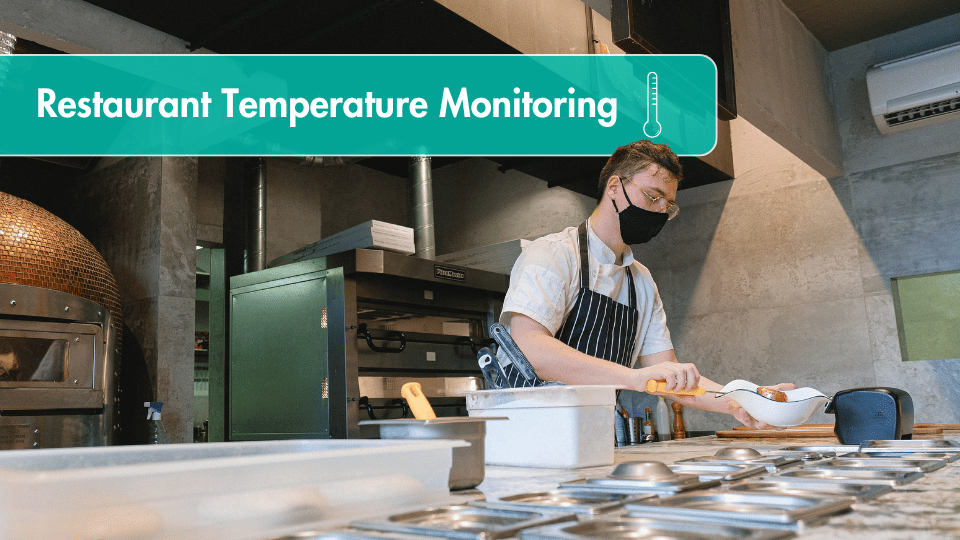
Restaurant Temperature Monitoring: A Comprehensive Guide
Ensuring food safety is a non-negotiable priority for any restaurant. Improper food storage or preparation can lead to contamination, spoilage, and foodborne illnesses, posing significant risks to customer health and safety. For restaurants, it’s not just about meeting health codes; it’s about building trust with customers and ensuring your reputation remains intact.Beyond customer health, non-compliance with food safety regulations can result in substantial fines, closure notices, and long-term reputational damage. Effective temperature monitoring helps protect both your customers and your business by ensuring food is stored, prepared, and served at safe temperatures.In this guide, we’ll dive deep into the essentials of restaurant temperature monitoring, the risks of relying on outdated methods, and how digital solutions like KNOW can elevate your food safety standards.
What Is Food Temperature Monitoring?
At its core, temperature monitoring ensures that food remains within safe temperature ranges throughout its lifecycle in your restaurant. This includes stages such as receiving deliveries, storing perishables, preparing meals, and serving customers.According to food safety guidelines, the “danger zone” for food is between 40°F and 140°F. In this temperature range, bacteria such as Salmonella, E. coli, and Listeria can multiply rapidly, turning otherwise safe food into a potential health hazard. For instance, leaving perishable ingredients at room temperature for just two hours can significantly increase contamination risks.While many restaurants rely on thermometers and manual logging to monitor food temperatures, these methods often fall short. Paper logs can be lost or improperly filled out, and busy staff may forget to perform timely checks.
Why Temperature Monitoring Should Be a Top Priority
Let’s cut to the chase: monitoring food temperatures is about more than just checking a box on a compliance form. It’s about keeping your customers safe, your kitchen efficient, and your business thriving. Here’s why it matters:
1. Protect Your Customers and Your Brand
Foodborne illnesses aren’t just a health risk; they’re a business killer. Even a single incident of contaminated food can cause a ripple effect of bad reviews, customer distrust, and legal troubles.Take poultry, for example. If chicken isn’t cooked to at least 165°F (74°C), bacteria like Salmonella can survive, leading to potential outbreaks. Similarly, perishable items stored above 40°F (4°C) can spoil, putting your patrons at risk.By monitoring and maintaining the correct temperatures for storage, preparation, and service, you minimize these risks. Customers may not always notice safe practices, but they’ll certainly notice when something goes wrong. Temperature monitoring helps ensure they never have to.
2. Navigate Health Inspections with Confidence
Health inspections are a necessary stress for restaurant owners. Inspectors focus heavily on temperature logs, and gaps or errors can result in penalties, temporary closures, or even license revocation.Unfortunately, manual methods of temperature recording often fall short. Staff may forget to log a reading during a rush, or paper logs might get misplaced. These small missteps can have serious consequences.A modern temperature monitoring system simplifies inspections by maintaining a reliable, accessible digital record of compliance. When the inspector asks for logs, you can provide them instantly, complete with timestamps and alerts for any corrective actions taken.
3. Avoid Expensive Food Waste
Here’s a scenario no restaurant wants to face: You walk into the kitchen one morning and discover your freezer broke down overnight. Thousands of dollars’ worth of ingredients—gone. It’s not just a financial loss; it’s also a service disruption. You might have to explain to customers why their favorite dishes aren’t available that day.This scenario is entirely preventable with real-time monitoring systems. Sensors alert you to temperature fluctuations as soon as they occur, allowing you to act before the damage is done. For restaurants operating on tight margins, this kind of early warning system can make all the difference.
4. Elevate Food Quality
Great meals aren’t just about the recipes; they’re also about the ingredients. Maintaining the right storage, cooking, and holding temperatures ensures your ingredients stay fresh and your dishes are served at their peak quality.For instance, if your soup cools too slowly after cooking, it may develop off-flavors or even spoil. Temperature monitoring ensures these processes are managed precisely, so your guests always receive the quality they expect.
Key Areas Requiring Temperature Monitoring
1. Cold Storage
Cold storage units, like refrigerators and freezers, must maintain consistent temperatures to prevent spoilage. The FDA recommends keeping refrigerators at 40°F or below and freezers at 0°F or below.
2. Cooking and Hot Holding
Cooking temperatures must meet safety thresholds to kill harmful pathogens. For example:
- Poultry: 165°F
- Ground meats: 160°F
- Seafood: 145°F
Hot-holding equipment should keep prepared food at a minimum of 135°F.
3. Cooling Process
Improper cooling is a common culprit for foodborne illnesses. The FDA’s two-stage cooling method advises cooling cooked food from 135°F to 70°F within two hours and from 70°F to 41°F within the next four hours.
4. Equipment Maintenance
Temperature fluctuations often stem from equipment malfunctions. Regular maintenance and monitoring can help prevent costly breakdowns and food spoilage.
Emerging Challenges in Temperature Monitoring
In today's dynamic restaurant environment, challenges like labor shortages, high turnover rates, and increasing regulatory pressures make manual processes less feasible. Moreover, multi-outlet restaurants need consistent standards across locations, adding another layer of complexity.If you’re still relying on traditional methods to monitor food temperatures in your restaurant, you’re likely facing some familiar frustrations. While these methods have been the standard for years, they come with several limitations that make it harder to maintain food safety and compliance. Let’s break down the biggest challenges and why they’re holding your restaurant back.
1. Human Error in Manual Processes
Picture this: it’s a Friday night, your restaurant is packed, and your staff is juggling orders, prep work, and customer service. In the chaos, someone forgets to record the fridge temperature, or worse, they jot down a random number to save time. Sounds familiar?Manual temperature logging on paper or spreadsheets is not just tedious—it’s also unreliable. Employees are human, and mistakes happen, especially during busy shifts. There’s also the risk of losing or damaging paper records, leaving you without proof of compliance during inspections.Unfortunately, even one small error can lead to serious consequences, from food spoilage to regulatory penalties.
2. No Real-Time Alerts
Another major downside of traditional methods is their reactive nature. Traditional thermometers and logs don’t alert you in real-time if something goes wrong. For instance, if your walk-in cooler malfunctions overnight, you might not notice until the next morning—after thousands of dollars’ worth of food has been ruined.This lack of real-time insights means problems often escalate before they’re detected, resulting in food waste, financial losses, or even health violations. Without a system to notify you the moment temperatures go out of range, your restaurant is always one step behind.
3. Inconsistent Documentation
Consistent and accurate documentation is a cornerstone of compliance, but traditional methods make this harder than it sounds. Paper logs can pile up, get misplaced, or be incomplete. Spreadsheets aren’t much better—they require manual updates, and it’s easy for someone to forget or enter incorrect data.The result? When a health inspector asks for your records, you’re left scrambling to find them or explaining gaps in the data. Not only is this stressful, but it can also damage your credibility as a business committed to food safety.
How Technology is Changing the Game
The rise of digital tools has transformed the way restaurants approach temperature monitoring. By replacing manual processes with automated solutions, restaurant operators can:
- Minimize human error
- Save time on routine tasks
- Ensure compliance with ease
- Gain real-time visibility into food safety data
How KNOW Can Help with Temperature Monitoring
KNOW isn’t just a task management tool—it’s your all-in-one restaurant operations assistant. Here’s how it transforms temperature monitoring and other critical workflows:
- Accurate and Efficient Temperature Tracking: KNOW simplifies temperature monitoring by enabling staff to record equipment and food temperatures digitally, ensuring precise and consistent documentation.
- Scheduled Temperature Checks: KNOW allows you to set recurring reminders for temperature monitoring tasks, ensuring checks are performed at the right time every day.
- Prompt Issue Escalation: If temperature anomalies are detected, multi-stage workflows help escalate the issue to the appropriate team, minimizing delays in corrective action.
- Centralized Compliance Monitoring: The digital forms dashboard provides real-time insights into completed temperature checks, timestamps, and compliance rates, making it easier to maintain food safety standards.
- Audit-Ready Reports: Generate detailed reports on temperature logs and compliance for audits or inspections with just a few clicks.
Why KNOW is an ideal solution
When it comes to simplifying your restaurant operations, KNOW checks all the right boxes. Here’s what makes it a game-changer for restaurants:
- Ready to Go, No Hassle: Forget complicated IT setups or hosting requirements—this app is ready to use right out of the box. Onboarding your team is quick and stress-free.
- Customizable to Your Needs: Whether it’s setting access controls, enabling or disabling features, or tailoring workflows, the app can adapt to your restaurant’s unique needs with ease.
- Built for the Frontline: With its tiny 10MB size, offline functionality, and optimization for low-end devices, it’s designed to work anywhere—even in challenging conditions.
- Easy for Everyone to Use: Thanks to an intuitive design, team members of all ages and technical skill levels can quickly learn and use the app. No steep learning curves here.
- Supports Your Team’s Diversity: With multi-language support for all major languages, this tool is built for diverse teams.
- Top-Notch Customer Support: From setup to ongoing help, you’ll have expert support whenever you need it, ensuring the app works seamlessly for your business.
Final Thoughts
Effective temperature monitoring is a cornerstone of restaurant operations, but it doesn’t have to be a hassle. KNOW offers a modern, efficient solution that streamlines not just temperature checks, but every aspect of restaurant management.Ready to digitize your restaurant operations and eliminate unnecessary stress? Book a demo with KNOW today and discover how our all-in-one platform can transform the way you work.
Frequently Asked Questions:
1. What is the "danger zone" for food temperatures?The danger zone is between 40°F and 140°F (4°C to 60°C), where bacteria can grow rapidly, increasing the risk of foodborne illnesses.2. How does KNOW ensure compliance with food safety regulations?KNOW automates temperature monitoring activity and documentation, storing detailed records that can be easily accessed during inspections to demonstrate compliance.3. What types of restaurants benefit from KNOW?KNOW is ideal for all types of restaurants, from small cafes to large chains, as it simplifies temperature monitoring and ensures consistency across operations.4. Is the KNOW app easy to use for staff members?Yes, KNOW is designed with an intuitive interface, making it easy for all team members to use, regardless of technical experience.
Enjoying this article?
Ready to streamline your operations?

Related Articles
Bar Staff Training: A Complete Guide to Building a Skilled, Confident Team


.png)
How to Create Interactive Training Modules: A Practical Guide for Restaurants
.png)

Preventing Employee Burnout in Restaurants: Causes, Signs & Solutions