
Restaurant Service Standards: A Practical Guide to Consistency, Quality, and Guest Satisfaction
Restaurant service standards are documented operational guidelines that tell your team exactly how to greet guests, take orders, resolve problems, and move through every step of service. They deserve the same precision you apply to food quality or inventory control, because service is the part of your operation customers interact with most and remember longest.
Even with high-quality food, a breakdown in service can ruin the entire dining experience. This article breaks down how to implement service standards from the inside out, what to include in your processes, and how to make sure every team member upholds the level of service that keeps guests coming back.

Why Restaurant Service Standards Matter
Service standards are not a philosophy; they are operational guidelines for how your team interacts with guests during every shift. Restaurants that lack them tend to struggle with predictable problems.
- Inconsistent service across shifts and staff.
- Unresolved guest complaints or concerns.
- Delays during high-volume periods.
- Low team accountability.
- Missed opportunities for guest recovery.
Service quality directly affects customer satisfaction, retention, and your brand's reputation in both word of mouth and online reviews, and consistent service is what turns one-time diners into loyal customers.
What Restaurant Service Standards Cover
Service standards should cover every customer-facing moment, from the second a guest enters to the moment they leave. That includes:
- Greeting customers promptly and warmly.
- Accurately taking orders and offering suggestions.
- Handling special requests and food allergies properly.
- Monitoring tables without hovering.
- Managing customer inquiries and complaints.
- Presenting the check and closing the table efficiently.
- Maintaining cleanliness and readiness in the dining area.
Each action, tone, and response is part of the standard of service. It is not about personality; it is about repeatable systems.
The 7 Steps of Service in a Restaurant
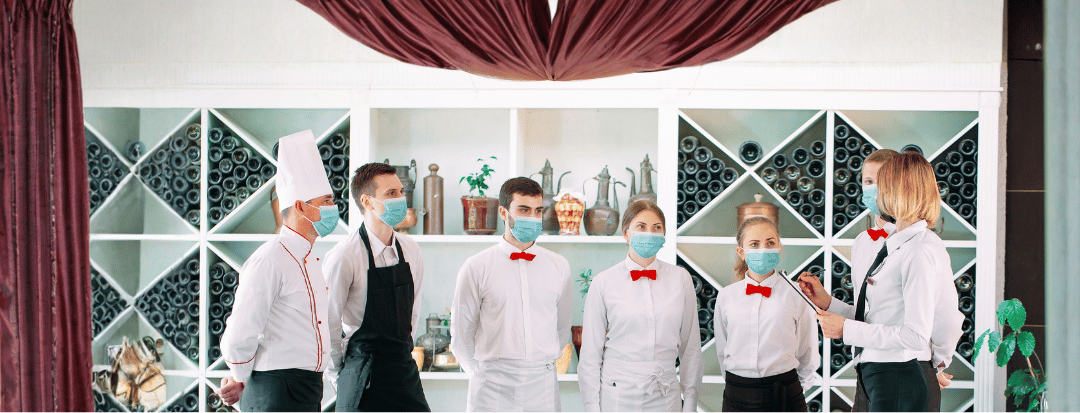
While details vary between quick-service and full-service formats, seven steps form the backbone of high-quality dining service and help guests receive a smooth experience every time.
Training staff to follow these seven steps improves consistency across service teams and keeps guest satisfaction the core priority.
Establishing Service Standards for Your Restaurant
Service standards come from clearly defined processes that are reinforced through training, evaluated during service, and refined with feedback. To establish yours, follow these seven steps.
- Define clear expectations for each customer-facing role.
- Document specific behaviors, so "greet the guest" or "check back" has a concrete meaning.
- Incorporate brand tone into all customer interactions.
- Train with real examples, not just concepts.
- Use role-play and shadowing during onboarding.
- Assign accountability by role, not just by shift.
- Include measurable indicators like response times, upsell rate, and guest satisfaction.
If standards are not clearly defined, staff will create their own, and the result is inconsistent service.
Operational Areas Service Standards Should Cover
Service does not exist in isolation, so your standards must tie into the operational areas that shape the customer experience, from greeting and seating through dining-area readiness.
Service quality is often the sum of these behind-the-scenes practices, and consistency across all of them leads to fewer service failures.
How to Implement Restaurant Service Standards Across Your Team
Rolling out standards takes more than posting a list in the break room; they have to become part of how your team thinks and works. Put them into practice operationally.
- Incorporate standards into every role's training, from host to expo.
- Use onboarding checklists tied to service actions so you coach proactively.
- Deliver service training in modules covering greeting, order taking, guest recovery, and closure.
- Pair new hires with experienced service providers to learn real pacing and tone.
- Use customer feedback to reinforce training, sharing positive and negative examples in service huddles.
Trained with intention and reinforced with examples, service standards become muscle memory.
Maintaining Consistency in Service Delivery
Upholding standards takes ongoing systems that reinforce expectations and address drift, not just initial training. These methods keep delivery consistent.
- Pre-shift service briefs: Daily five-minute reviews of service focus areas.
- Guest feedback reviews: Use reviews and surveys to highlight wins and fix weak spots.
- Secret shopper programs: Unbiased data on actual performance.
- Manager table visits: Real-time monitoring of customer satisfaction.
- Quarterly refreshers: Focused sessions on specific service gaps.
High-quality service fades without reminders, and continuous improvement keeps your team aligned with your brand identity and values.
Training for Special Requests and Guest Complaints
Handling special requests well is one of the easiest ways to drive loyalty, and mishandling them is one of the fastest ways to lose it. Approach these situations with service excellence.
- Teach staff to confirm and repeat back requests to avoid errors.
- Document known allergies or modifications in the POS and kitchen.
- Empower front-of-house staff to offer reasonable accommodations without delay.
- Have a defined escalation process for complex complaints.
- Follow up with guests proactively to show the issue was taken seriously.
Every special request is a chance to demonstrate care, and handling complaints well builds trust faster than flawless service with no issues at all.
Tying Service Standards to Brand Identity
Your service standards should match the dining experience you promise, since a quick-service brand has different expectations than a high-end establishment, though both need standards that support their positioning.
- Casual counter-service: Speed, order accuracy, and a friendly tone matter most.
- Upscale full-service: Anticipating needs, formality in tone, and attention to detail take priority.
- Family-style or themed dining: Personality, guest interaction, and storytelling become key.
Your brand sets the tone, and your standards make sure it is delivered consistently by every staff member.
Service Standards in High-Volume or Multi-Location Operations
The more units you manage, the harder consistent service becomes, which is where centralized documentation, structured training, and digital tracking become essential. Maintain standards across locations with these steps.
- Standardize the customer journey and service scripts.
- Use digital training tools to deploy updates across all units at once.
- Implement service checklists for opening, mid-shift, and closing routines.
- Audit service execution quarterly using guest feedback and internal assessments.
- Build performance dashboards that include service quality indicators.
Without systems, scale amplifies inconsistency; with systems, it amplifies repeat business.
How to Track Staff Performance on Service Standards
Defining and training on service is only half the job; you also need visibility into execution to correct issues early and reward high performers.
Service quality improves when expectations are clear, performance is tracked, and feedback loops stay active.
Service Standards and Customer Loyalty
Memorable dining experiences are built on consistently excellent service, not luck. Guests return not just for the food but because they feel known, respected, and cared for. Service standards directly influence:
- Guest satisfaction at the table.
- Customer loyalty over time.
- Positive word of mouth and online reviews.
- Fewer complaints and better complaint recovery.
- Brand trust and perceived professionalism.
Repeat customers do more than drive revenue; they lower acquisition costs, stabilize operations, and become advocates who promote your restaurant without being asked.
How KNOW Helps You Operationalize and Scale Service Standards
Defining service standards is only half the job; the real challenge is ensuring they are followed consistently across shifts, teams, and locations. KNOW helps restaurants embed service standards into daily routines with smart checklists, SOP access, and team accountability from a mobile-friendly platform built for frontline teams.
- Digital SOPs for service delivery: Upload step-by-step processes, guest interaction guidelines, and complaint resolution playbooks with photos and videos, so every team member has on-demand access to how service should be delivered.
- Shift-based service checklists: Assign and track routine tasks like table resets, restroom checks, and guest recovery steps so nothing gets missed, even during peak hours.
- Instant mobile access: From seating scripts to allergy protocols, team members reference standards on their own devices, eliminating guesswork without micromanagement.
- Reinforcement through tasks and acknowledgments: Assign service tasks, deliver pre-shift reminders, and require acknowledgment of updated procedures to reinforce standards in real time.
- Manager visibility and accountability: Track task completion, spot compliance gaps, and respond to guest feedback faster, so managers uphold service quality without being everywhere at once.
KNOW turns your service playbook into action, helping your team deliver the consistent, high-quality service that builds loyalty, protects your brand, and drives repeat visits. Book a free demo to see how it works.
Final Thoughts
Restaurant service standards are not a checklist; they are the operating system that runs your guest experience. Documented clearly, trained consistently, and reinforced with real-time monitoring, they become a competitive advantage.
Customers remember how they were treated, and when your team consistently delivers excellent service, they respond with loyalty, reviews, and repeat business. The restaurants that grow are the ones that get service right, not once but every single shift. Book a free demo to make consistent service your default.
Frequently Asked Questions
1. What are restaurant service standards, and why are they important?
Restaurant service standards are documented guidelines that define how staff should interact with guests at each stage of service, from greeting customers to resolving complaints. They matter because they ensure consistency, align staff behavior with expectations, and drive customer satisfaction and loyalty, while also making training easier and delivery more reliable across shifts.
2. How do restaurant service standards impact customer loyalty?
When guests consistently receive excellent service, they are more likely to return, recommend the restaurant, and leave positive reviews. Service quality creates trust and predictability, both key drivers of loyalty, and even after minor errors, restaurants that resolve concerns promptly tend to retain customers.
3. How can I train my team to meet customer service standards?
Set clear expectations for each role and step of the process, then use a mix of training sessions, real-life examples, and role-play to build confidence and consistency. Ongoing training reinforces key behaviors like handling inquiries, responding to special requests, and maintaining a welcoming atmosphere.
4. What is the best way to handle guest complaints while maintaining service excellence?
Start with active listening and immediate feedback, training staff to acknowledge problems quickly, offer solutions within their authority, and escalate when needed. The goal is to turn a negative moment into a chance to show guests they are valued, which often increases satisfaction and strengthens relationships.
5. How often should we review and update our restaurant service standards?
Review standards at least quarterly, especially after new menu items, changed processes, or repeated feedback on similar issues. Regular reviews support continuous improvement and keep standards aligned with guest expectations, using feedback, reviews, and employee insights as inputs.
6. Can service standards improve staff performance and morale?
Yes. Clear standards reduce confusion, help staff feel confident, and provide a framework for fair feedback. When employees know what is expected and feel supported through training, they deliver better service and stay more engaged, and consistent delivery reduces stress during busy shifts.
7. How do service standards ensure consistency in large or multi-location restaurants?
In multi-location operations, standards act as a baseline so customers get the same quality regardless of location. Standardized training materials, interaction scripts, and processes maintain brand consistency, and digital tools plus performance tracking help teams uphold standards even during high-volume periods.
8. What role does customer feedback play in refining service standards?
Feedback provides real-time, actionable insight into what is working and what is falling short, helping you spot service gaps and recurring complaints. Encourage open communication through surveys, QR-code feedback, or manager interactions, and use it to guide future training and reinforce a culture of service excellence.
9. How do service standards contribute to a memorable dining experience?
Memorable experiences are built on attention to detail, consistency, and empathy. Standards ensure guests feel welcomed, orders are handled correctly, and concerns are addressed with care, so every purposeful interaction leads to greater satisfaction and a lasting positive impression.
10. What service behaviors do guests expect in today's restaurant environment?
Guests expect timely service, personalized interactions, and smooth communication, including accurate order-taking, courtesy, knowledgeable answers to inquiries, and clear resolution of issues. They increasingly value hospitality traits like empathy, anticipation of needs, and service that feels human rather than robotic.
Enjoying this article?
Ready to streamline your operations?

Related Articles

Bar Staff Training: A Complete Guide to Building a Skilled, Confident Team


.png)
How to Create Interactive Training Modules: A Practical Guide for Restaurants
.png)

Preventing Employee Burnout in Restaurants: Causes, Signs & Solutions