The Ultimate Guide to Restaurant Food Storage Guidelines and Hierarchy
Restaurant food storage is the system of cold, freezer, and dry storage practices that keeps ingredients safe, fresh, and compliant, starting with a strict food storage hierarchy that prevents cross-contamination. In a commercial kitchen, food safety begins here, and inconsistent storage is not just a health risk; it drives waste, inspection failures, and lost profit.
A single case of foodborne illness can harm customers, invite legal issues, and damage your brand's credibility. This guide breaks down restaurant food storage guidelines, fridge and freezer practices, cross-contamination prevention, and the habits that minimize waste and spoilage.
Why Food Storage Hierarchy Matters
Food storage hierarchy is a non-negotiable food safety standard, required by health departments and guided by the FDA Food Code. Placing raw meat above cooked foods or dairy can cause contamination that stays invisible until it reaches your guests. Done right, the hierarchy helps you:
- Prevent the spread of harmful bacteria.
- Reduce food waste and spoilage.
- Improve food quality and freshness.
- Meet public health and inspection standards.
- Improve the efficiency of kitchen operations.
Cold Storage Hierarchy for Refrigerators
In refrigerators, food should be stored top to bottom in order of risk to prevent cross-contamination, with ready-to-eat foods highest and raw meat lowest.
Key cold storage tips keep the hierarchy working:
- Maintain fridge temperature at or below 41°F using an appliance thermometer.
- Keep raw items in leak-proof, labeled containers.
- Use FIFO (first in, first out) rotation to minimize spoilage.
- Avoid overstocking, which restricts airflow and causes uneven cooling.
- Avoid foil or plastic wrap directly on open containers, since it traps moisture and speeds spoilage.
Freezer Storage Best Practices
Maintain freezers at 0°F (-18°C) or colder, label and date all items, and use airtight containers or commercial vacuum seals to avoid freezer burn, rotating stock with FIFO just like refrigerated items. Good candidates for the freezer include:
- Bulk proteins such as beef, chicken, and fish.
- Prepared batches of sauces or cooked items.
- Frozen vegetables and fruits.
Ensure your team understands safe thawing, never thawing meat at room temperature but instead using refrigeration, cold running water, or commercial thawing equipment.
Restaurant Dry Storage Guidelines
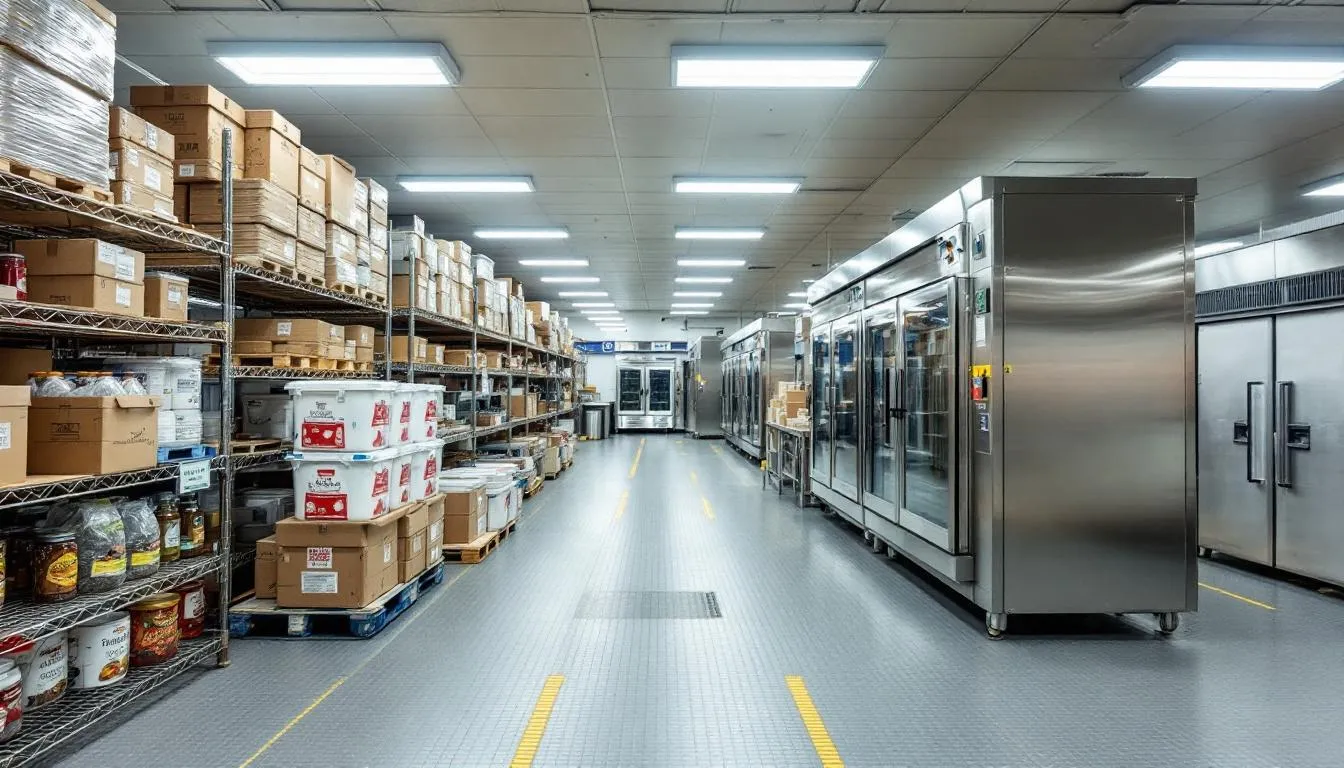
Dry storage is for shelf-stable foods and ingredients that do not require refrigeration, such as canned goods, grains, pasta, flour, oils, unopened condiments, spices, shelf-stable sauces, and disposables. Keep the environment within safe standards:
- Temperature between 50 and 70°F.
- Humidity below 60%.
- Ventilated, clean, and pest-free.
- Items stored at least 6 inches above the floor and 18 inches from the ceiling.
Use labeled, airtight containers to preserve freshness and keep pests out, check expiration dates weekly, and run monthly inventory audits.
Preventing Cross-Contamination
Preventing cross-contamination is central to food safety, and unintentional contamination often happens during busy prep or through poor storage habits. Use these prevention strategies:
- Use color-coded cutting boards and utensils, such as red for raw meat and green for vegetables.
- Keep raw and ready-to-eat foods physically separate.
- Sanitize all food-contact surfaces between tasks.
- Train staff regularly on storage zones and food safety basics.
Safe Temperature Zones and the Danger Zone
Temperature control is one of the most critical food storage guidelines. Cold foods must be held at 41°F or below, hot foods at 135°F or above, and the danger zone between 41°F and 135°F is where bacteria grow fastest. Use food thermometers to verify safe cooking temperatures:
- Ground beef: 160°F.
- Poultry: 165°F.
- Seafood: 145°F.
- Reheated leftovers: 165°F.
Invest in digital thermometers and smart alerts to maintain proper temperatures at all times, and post temperature charts near prep and storage zones as daily reminders.
Storing Cooked Foods and Leftovers
Cooked food must be cooled rapidly and stored safely. Cool it in shallow containers no more than 2 inches deep, chill large batches quickly with ice baths or blast chillers, label all cooked or prepped food with name, date, and time, and store leftovers within 2 hours of cooking, reheating only once. Cooked food should drop from 135°F to 70°F within 2 hours, and from 70°F to 41°F within 4 hours.
Best Practices for Thawing Frozen Food
Incorrect thawing leads to bacterial growth, so follow these approved methods:
- In the refrigerator: The safest method, though it requires advance planning.
- Under cold running water: Food must be in leak-proof packaging and under 70°F water.
- In the microwave: Only if the food is cooked right away.
Never thaw food on countertops or leave it out overnight.
Food Storage Containers and Labeling
Proper containers reduce food waste and improve traceability. Use food-safe, airtight containers with tight-fitting lids, avoid storing food in open cans, and label with food name, prep date, and use-by date. Color-coded bins for meats, dairy, and vegetables improve visual identification and prevent mix-ups, and cracked containers should be replaced promptly since micro-cracks can harbor bacteria.
Daily Storage Maintenance and Inspections
Build storage checks into your daily operations checklist.
- Log refrigerator and freezer temperatures twice a day.
- Check for any items outside the safe temperature range.
- Inspect food for spoilage, mold, or expiration.
- Wipe down all shelves, doors, and containers.
On a weekly and monthly basis, clean and sanitize all storage areas including hard-to-reach zones, conduct detailed inventory checks, review food waste logs to identify avoidable spoilage, and schedule deep cleans for cold storage units and dry storage racks.
Reducing Food Waste Through Smart Storage
Poor storage turns usable food into unnecessary waste. These strategies cut that loss:
- Implement a FIFO system so the oldest inventory is used first.
- Train staff on food labeling and use-by dates.
- Reassess prep volumes based on historical demand.
- Break down bulk orders into daily portions and freeze what is not needed.
- Monitor prep-to-waste ratios weekly to spot trends and improve forecasting.
Even properly stored food has a lifespan, so track and document expiration dates on all perishables and avoid "just in case" overordering.
Common Restaurant Storage Mistakes to Avoid
A few recurring mistakes account for most storage-related violations. Watch for these.
- Placing raw chicken above cooked vegetables in the fridge.
- Letting food sit uncovered near prep stations.
- Not labeling opened containers or sauces.
- Failing to clean storage bins regularly.
- Ignoring temperature log discrepancies.
- Using household containers not rated for food safety.
Food Storage SOPs: Why Training Matters
Storage only stays consistent when staff know the rules, so train the team on where each type of food goes, how to handle spills and contamination, each food's safe storage temperature, and when to discard versus reuse food. Reinforce SOPs during onboarding, quarterly refreshers, and after any violation.
Create clear, visual SOP guides in kitchen areas, and with KNOW you can digitize these SOPs into mobile-ready, multilingual formats that are instantly accessible during training or on shift.
Restaurant Storage Guidelines by Category
Pulling the rules together by food category makes them easy to reference on the line.
How KNOW Helps Simplify Food Storage Compliance and Safety
Food safety rarely fails because teams do not care; it fails when systems are unclear, steps are skipped, or problems go unnoticed. KNOW brings structure to the chaos by turning scattered routines into a single, trackable system, so teams follow the right process every time without a clipboard or manual follow-up.
Digital checklists for storage routines
KNOW lets teams complete daily storage checks, from logging refrigerator temperatures to verifying FIFO rotation, with customizable checklists for cold and freezer temperature checks that auto-escalate when thresholds are missed, end-of-day leftover labeling and discards, weekly dry storage cleaning, and expiration date reviews.
Photo and video proof
Staff can upload images of incorrectly stored food, leaks, or expired inventory directly from their phones, creating a visual log of compliance and errors that helps managers resolve issues faster and track repeat problem areas across shifts or locations.
Storage SOPs and onboarding
Use KNOW to deliver just-in-time micro-training on storage SOPs, updated instantly across all outlets, making compliance part of daily habits rather than an occasional correction.
Audit-ready logs and reports
KNOW logs every completed task and deviation in real time, creating a complete digital trail for food safety audits so your kitchen stays inspection-ready without paper clutter.
KNOW supports your restaurant's storage, safety, and overall operations in one platform. Book a free demo for a walkthrough.
Final Thoughts
Food storage is not just about compliance; it is the foundation of food safety, quality, and cost control. A proper food storage hierarchy helps prevent foodborne illness, reduce waste, and ensure you always serve safe, high-quality food.
From labeling and temperature logging to zoning and rotation, every step matters. Get your team aligned, your tools in place, and your processes documented, because the kitchen's success starts with what happens behind the fridge door. Book a free demo to see how KNOW keeps it consistent.
Frequently Asked Questions
1. What is the correct food storage hierarchy in a restaurant refrigerator?
Foods are arranged by their cooking temperature to prevent cross-contamination. Top shelves hold ready-to-eat foods like deli meats and cooked items, while raw seafood, whole cuts of beef and pork, ground meats, and raw poultry are placed progressively lower, with raw poultry always on the bottom shelf. This prevents raw juices from contaminating other foods.
2. What temperature should cold food be stored at in a restaurant?
Cold food should be stored at or below 41°F to slow the growth of harmful bacteria, and refrigerator temperature should be monitored daily with an appliance thermometer. Walk-ins and reach-ins should never exceed the safe threshold, especially with perishables like fresh fish, cooked foods, and egg substitutes.
3. How do I prevent foodborne illness through proper food storage?
Separate raw meat from ready-to-eat foods, use airtight containers, label items with expiration dates, and maintain cold storage temperatures. Use plastic wrap or containers to prevent exposure, and practice safe thawing to avoid leaving food in the danger zone where bacterial growth accelerates.
4. Where should ready-to-eat foods be stored in the refrigerator?
Ready-to-eat foods should always be stored on the top shelf to avoid contamination from drips off raw meat or other high-risk foods. These include cooked meats, deli meats, and other items that need no further cooking before service.
5. What is the best way to store raw meat in a restaurant kitchen?
Store raw meat in leak-proof containers on the lowest shelf of the cold storage unit, separated from cooked and ready-to-eat items to prevent foodborne illness. Check internal temperature before service and label the meat with delivery and expiration dates for compliance.
6. How often should restaurant staff check refrigerator temperature?
Guidelines recommend checking refrigerator temperature at least twice daily, once at opening and again at closing, using a digital appliance thermometer and documenting readings. Real-time monitoring systems help ensure proper temperatures and reduce waste from unnoticed equipment issues.
7. What are dry storage requirements in a commercial kitchen?
Dry storage should be clean, well-ventilated, and kept between 50 and 70°F. Canned goods, shelf-stable foods, grains, and spices must be kept off the floor and away from chemicals or cleaning supplies, and inventory should be rotated with FIFO to prevent spoilage and waste.
8. Can I store thawing meat in the same fridge as other foods?
Yes, but only if done safely. Always thaw meat on a tray or in a container on the bottom shelf to prevent contaminating foods below, and never leave it uncovered or allow it to drip. This prevents cross-contamination and aligns with food safety basics.
9. What is the safe internal temperature to cook meat and ground beef?
Ground beef should reach an internal temperature of 160°F, whole cuts of beef and pork should reach 145°F with a 3-minute rest, and poultry must reach 165°F. Measure these with a food thermometer, as they are critical to public health and compliance.
10. How does proper food storage help reduce waste in restaurants?
Proper storage extends the life of perishables, prevents spoilage from temperature abuse, and minimizes contamination risk. Labeling, rotating stock, and maintaining safe temperatures keep food fresh and safe to serve, protecting both the bottom line and customer safety.
Enjoying this article?
Ready to streamline your operations?

Related Articles
Bar Staff Training: A Complete Guide to Building a Skilled, Confident Team


.png)
How to Create Interactive Training Modules: A Practical Guide for Restaurants
.png)
Preventing Employee Burnout in Restaurants: Causes, Signs & Solutions