Consistent Compliance Across Every Location


.webp)
.webp)



Why Operational Audits Break Down at Scale

hours
What Changes When Audits Go Digital
Streamline Audits From Start to Resolution
What Teams Actually Use KNOW For
What OurCustomers Say




Frequently Asked Questions
A centralized audit system gives operations teams one place to plan audits, run inspections, assign corrective actions, and track closure across every location. Instead of each site running its own procedures, a centralized system gives your audit team one consistent process with standardized internal controls. With KNOW, every location uses the same digital templates, and all findings, corrective actions, and completion data flow into one dashboard. The system also scales as your organization grows, so adding new locations does not mean rebuilding audit procedures from scratch.
Audit quality depends on consistent procedures and reliable data capture. Every audit in KNOW follows a structured digital template, so the process is identical whether conducted by an experienced manager or new staff. Team members capture findings on mobile with photos, notes, and timestamps, creating complete audit evidence for every item. Findings convert into assigned action plans with tracked deadlines. Over time, this consistent data capture gives your audit team valuable insights into which locations or departments need the most support.
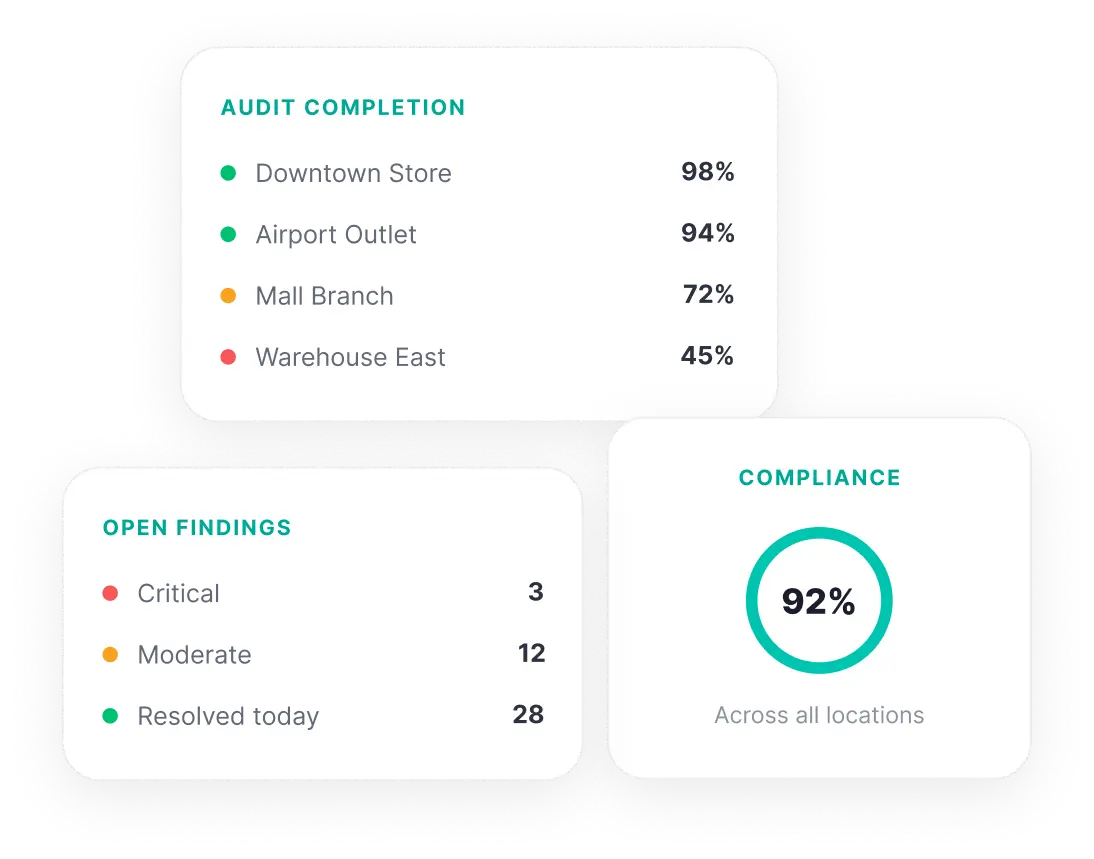
A multi-location audit runs consistently across multiple sites, whether five retail stores or five hundred restaurant branches. Every location not visited increases audit risk, and inconsistent procedures make it impossible to identify root causes of recurring issues. KNOW lets you build audit templates once and deploy them everywhere. Every site completes audits on the same criteria, and results flow into centralized reports where managers can compare findings, compliance rates, and resolution timelines to assess performance and allocate resources.
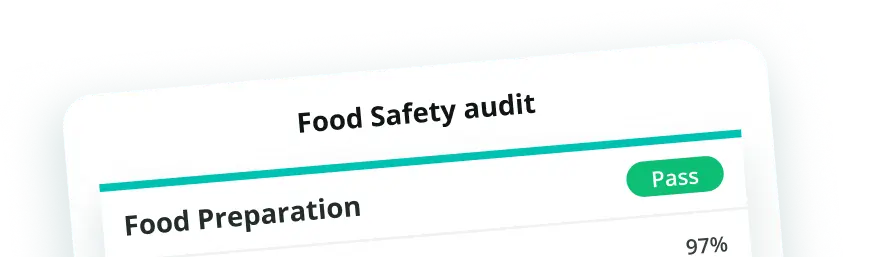
KNOW supports any internal audit or operational audit your teams conduct on the ground: food safety, brand standards, equipment inspections, safety walkthroughs, store compliance, facility checks, SOP adherence, and more. Each template supports scoring, photo evidence, notes, and follow-up task assignment. KNOW is not designed for financial audits, external statutory audits, or public sector audits. It is built for frontline operational audits, and the platform adapts to the full range of audit types your teams need.
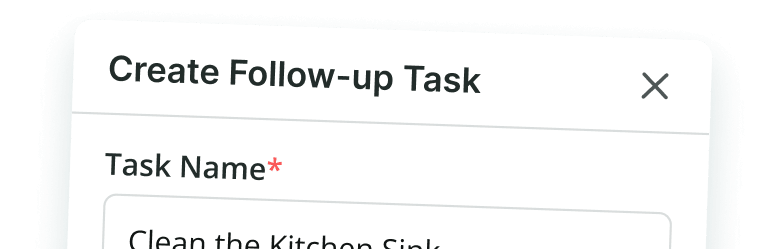
Without a system that connects findings to corrective actions and tracks them to completion, the same issues resurface every cycle and teams never address root causes. In KNOW, every finding converts into a task assigned to a specific team member with a deadline. The responsible person completes the corrective action with photo evidence and marks it done. Managers track all items from a single dashboard, and automated alerts flag overdue tasks, turning the audit process into a system that delivers actionable recommendations.
Yes. Paper audits delay reporting, lose data between shifts, and produce no trend analysis. Spreadsheets depend on manual entry and offer no live visibility across sites. With KNOW, audits are conducted on mobile, findings include photo documentation and timestamps, corrective actions are tracked automatically, and all data flows into centralized reports. The platform works offline, so teams with limited connectivity can complete audits and sync when connected. Eliminating repetitive tasks like manual data entry lets teams focus on analysis and follow up.
An audit tracking system monitors what has been audited, what findings were raised, who is responsible for corrective actions, and whether those actions have been completed. In KNOW, every audit is logged with completion data, scores, findings, and follow-up tasks. Dashboards show open vs. resolved findings, completion rates by location, and trend data over time. This visibility into audit outcomes also supports better resource allocation, helping management direct training or support to locations that consistently underperform.
KNOW lets you schedule recurring audits (daily, weekly, monthly) for specific locations or teams. Automated reminders notify the audit team when an audit is due, and the dashboard flags missed or overdue items. Templates are reusable and can be updated centrally, so when procedures change, the update rolls out to every site immediately. This ensures audit functions operate on a predictable, organization-wide cadence rather than reacting to problems after they surface.
Audits are assigned to specific employees. Findings are linked to responsible team members with deadlines. Every action has a status visible to managers across departments. Overdue items trigger automated alerts. The system creates a clear chain of responsibility from finding to resolution, with full documentation at every step. This level of accountability is what separates an effective audit program from one that generates reports no one acts on.
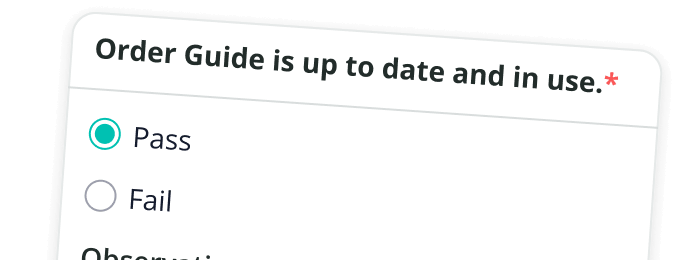
Management creates a digital audit template covering the areas to evaluate: cleanliness, merchandising, safety compliance, staff procedures, or any other relevant criteria. The template is deployed to the location on schedule. The auditor opens it on their mobile device, walks through the store, and scores each item while attaching photos and notes as audit evidence. Any failed item triggers a follow-up task assigned to the responsible employee with a deadline. Results are immediately visible on the centralized dashboard, where managers can compare scores across locations and track corrective action completion.
The four primary audit types are compliance audits, operational audits, financial audits, and information systems audits. Compliance audits evaluate adherence to laws, regulations, and internal policies. Operational audits assess the effectiveness of business processes and internal controls. Financial audits examine financial statements and accounting systems. Information systems audits review technology infrastructure and data security. KNOW is designed for compliance and operational audits in frontline environments. It is not built for financial audits or IT systems audits.
The 5 C's are Condition, Criteria, Cause, Consequence, and Corrective Action. Condition is what the auditor observed. Criteria is the standard it is measured against. Cause identifies the root cause of the gap. Consequence outlines the risk if unresolved. Corrective Action is the step to fix it. KNOW supports this framework directly: auditors document conditions with photos, scored templates establish criteria, and follow-up tasks capture the corrective action with assigned ownership and deadlines. Centralized reporting helps managers identify recurring causes over time.
The four types are compliance audits, operational audits, performance audits, and follow-up audits. KNOW supports all four within frontline operations. Compliance and operational audits are conducted using scored templates on mobile. Performance is tracked through completion rates, scores, and trend analysis across locations. Follow-up audits are built into the workflow itself, with every finding linked to a tracked corrective action that must be resolved and documented before it can be closed.
The best audit software for frontline operations should do more than collect audit responses. It should help teams standardize audits, capture evidence, assign corrective actions, track closure, and compare performance across locations. KNOW supports that full workflow in one platform, alongside checklists, tasks, training, communication, and reporting for frontline teams. The platform works offline on mobile, supports multi-location deployment, and is used by over 2 million frontline workers.
Audit software for frontline operations falls into three categories: general-purpose form builders, standalone audit apps, and integrated operations platforms. Form builders handle basic data capture but lack scoring, photo evidence, and corrective action tracking. Standalone audit apps cover inspections but do not connect to task management, training, or communication. KNOW integrates the full audit process within a platform that also manages checklists, tasks, and employee training, keeping all operational data in one centralized system.
General-purpose form and checklist tools can collect data, but they are not built for the end-to-end audit process frontline operations require. They lack scored templates, photo evidence capture, automatic task assignment from findings, tracked corrective actions, and centralized multi-location dashboards. KNOW connects the entire workflow from audit planning to resolution in one platform. It works offline on mobile and supports recurring schedules. For operations managers overseeing compliance at scale, the difference is between a data collection tool and a complete centralized audit system.